Ogose, the town of Ota Dokan ~ DEC, 2025 ~

The Ota clan, descendants of Minamoto no Yorimasa (Settsu Genji), who rose up against the Taira clan alongside Prince Mochihito, were based in Tanba (present-day Kameoka, Kyoto Prefecture) and took the name Ota. They later moved to Sagami, where, under the reign of his father, Ota Sukekiyo (Doshin), he demonstrated his skills as the head retainer of the Ogigayatsu Uesugi clan. The Ogigayatsu Uesugi clan was a branch of the Yamanouchi Uesugi clan, which had produced the Kanto Kanrei (regent) and was appointed guardian of Sagami. Sukekiyo (Doshin) and Sukenaga (Dokan) brought Sagami as well as the vast and fertile Musashi region under their control, creating a three-pole state in the first half of the Kanto Warring States period: the Yamanouchi Uesugi clan, based in Echigo and Kozuke, the Koga Kubo, and the Ogigayatsu Uesugi clan.

At Ryuonji Temple, the graves of father and son (Doshin and Dokan) are lined up side by side. There seems to be an organization trying to get Ota Dokan to appear in NHK's taiga drama, and flags are set up here and there. There seems to be a jinx that taiga dramas won't be popular unless they cover the Sengoku and Bakumatsu periods, but the medieval period is also quite interesting, so I would definitely like to support it.

The Sengoku period is generally considered to have begun with the Onin War (1467), but in the Kanto region it is generally considered to have begun with the Kyotoku War (1454). While the Kamakura Shogunate literally established its government in Kamakura, the Muromachi Shogunate established its headquarters in Kyoto, and from the start, the question of how to govern the Kanto region, home to highly independent warrior groups, was a challenge. Ashikaga Takauji appointed his eldest son, Yoshiakira, born to his wife, Akahashi Noriko, as the next Shogun. After the Kan'o Disturbance, he established the Kamakura government and dispatched his second son, Motouji, as the Kamakura kubo. The position of Kanto kanrei, which assisted the kubo, was passed down hereditarily to the Uesugi clan, Takauji's maternal family. Since the shogun had the power to appoint and dismiss, the Kanto kanrei essentially functioned as a watchdog over the Kamakura kubo.
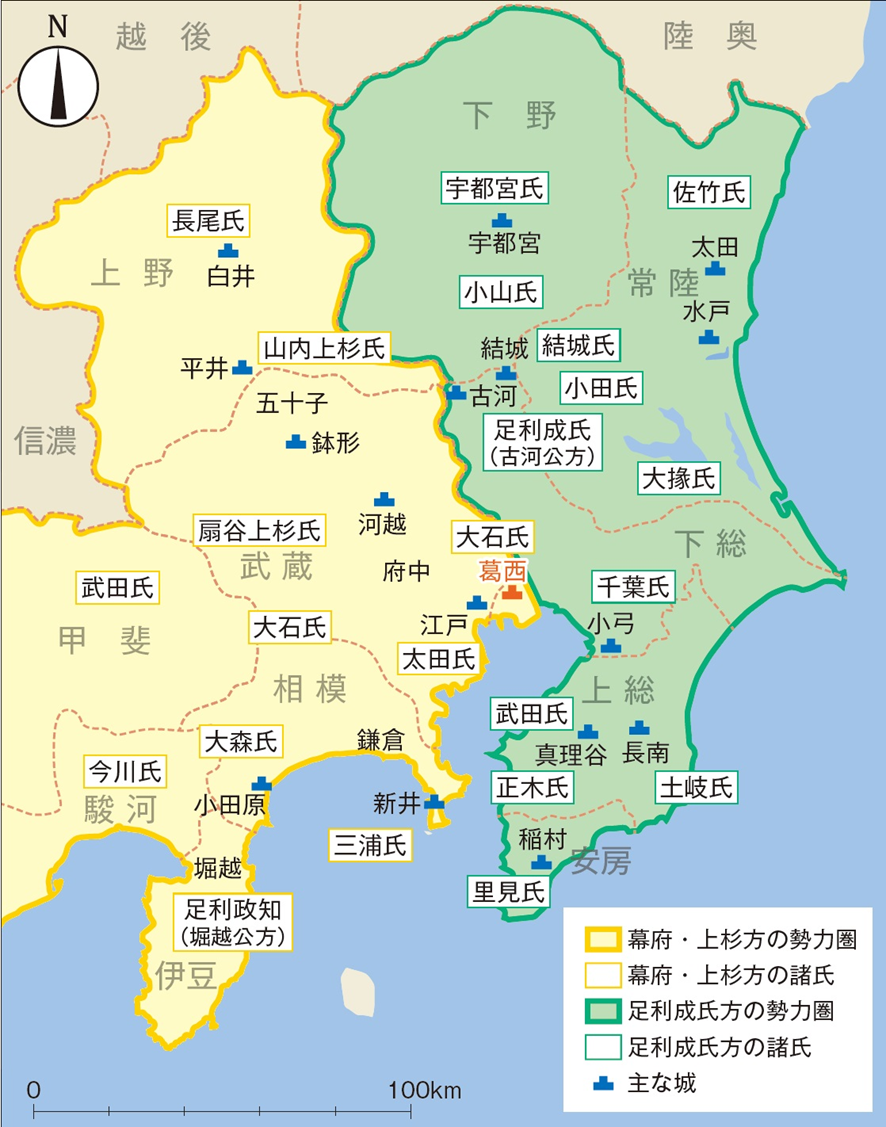
With each successive generation, the Kamakura kubo became increasingly independent from the shogunate, and eventually the fourth kubo, Mochiuji, committed suicide (the Eikyō War) after being attacked by the sixth shogun, Yoshinori. Mochiuji's son, Shigeuji, survived and somehow became the fifth kubo of Kamakura, but he had strong resentment toward the Uesugi clan, and he killed the then Kanto kanrei, Uesugi Noritada, starting the Kyōtoku War. During this process, Masatomo, the younger brother of the eighth shogun, Yoshimasa, was appointed as the next Kamakura kubo, but was stranded in Izu, where he ended his life as Horikoshi kubo. Shigeuji moved his palace to Koga and, as Koga kubo, confronted the Uesugi forces, and the Kanto region was divided in two.

In the conflict between the Kamakura kubo and the Kanto kanrei, Dokan expanded the power of his master, the Ogigayatsu Uesugi clan, and established three castles in Edo, Iwatsuki, and Kawagoe. This is a picture that may seem familiar, but it is the same as how the Hojo clan expanded their power northward half a century later, using Odawara Castle as their base.

After the end of the Kyotoku Rebellion, conflict between the two Uesugi clans (Yamauchi and Ogigayatsu) became apparent, but Uesugi Sadamasa, jealous of Dokan's fame and unable to contain his suspicions, invited Dokan to Kasuya-kan (present-day Isehara City) and assassinated him. Dokan reportedly cried out, "Our side is doomed!" After that, many of the Ogigayatsu Uesugi clan's vassals left and the clan went into decline. Sadamasa is said to have guided Ise Sozui (Hojo Soun) in his invasion of Izu, but he died soon after, and the Hojo clan, under three generations of Soun, Ujitsuna, and Ujiyasu, dominated the territory Dokan had established.
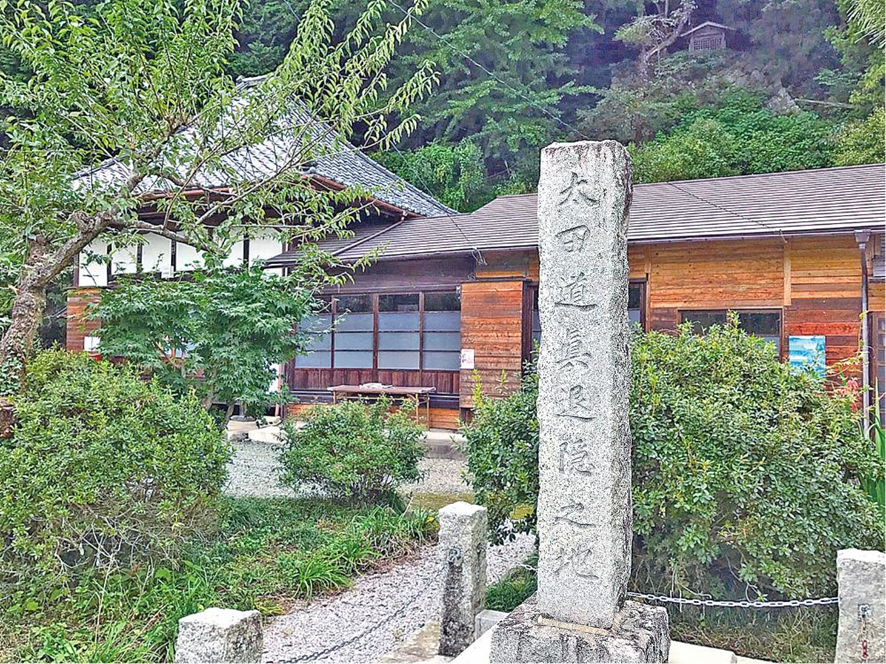
It seems that Dokan visited his father Doshin's retreat (Jitokuken) with the poet Banri Shukyu one month before his assassination. Upon hearing the news of Dokan's death, Michizane built Kenkoji Temple on the premises. When Dokan died at the age of 54, his father Michizane was 75 years old, so he must have felt very sad. Michizane died two years later.
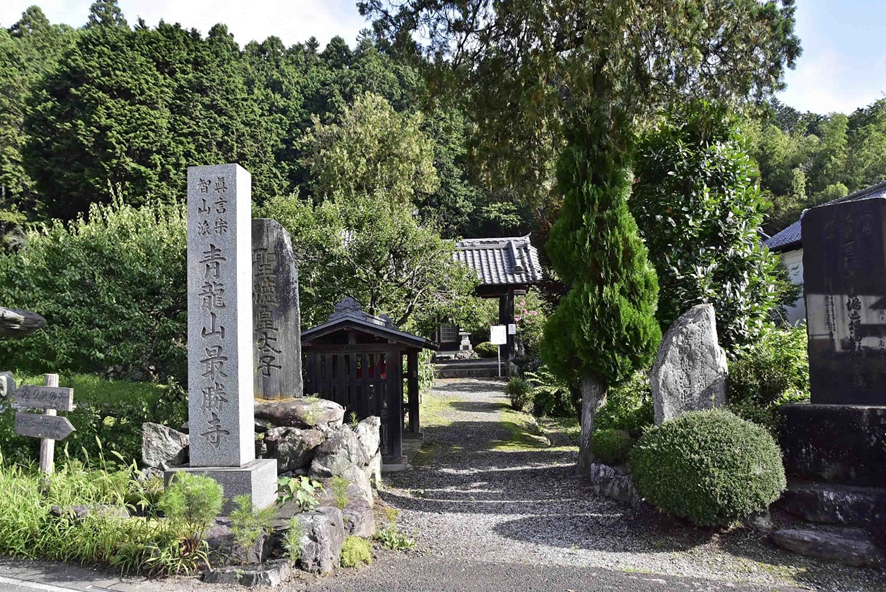
The Ota clan is said to have moved from Tamba to Sagami during the reign of Sukekuni, five generations before Dokan, and this is thought to have been during the period of turmoil during the Northern and Southern Courts period in the early Muromachi period. Since the Heian period, Musashi had been home to a clan of warriors known as the "Seven Musashi Clans," and without their support it would have been difficult to rule, but the Kodama clan was apparently the most powerful of them all. Saisho-ji Temple was founded by Yoritomo, who gave the territory to Kodama Undayu.

In one corner of the temple grounds stands a monument commemorating the sainted physician "Tashiro Miki," who was active during the Muromachi and Sengoku periods. He was apparently the teacher of Manase Dosan, who also treated Oda Nobunaga.

The Ogose clan is a branch of the Kodama clan, and the remains of the Kuroiwa clan's mansion remain as a hall to the Five Great Kings (Five Great Wisdom Kings) and an azalea park. For the Kanto samurai, Taira no Masakado and Minamoto no Yoritomo were heroes, so it must have been a difficult task for the Ota clan, who came from outside, to unite the local lords scattered across the vast Kanto Plain.

The Five Great Buddhas are said to be in the style of the Heian period, but the nearby Nyoirin Kannon statue has the date 1162 (Oho 2) written on its inside. This suggests that there was already a ruling class in the Heian period that was able to build first-class Buddhist statues and Buddhist halls.

Shohoji Temple is a Zen temple founded in the Kamakura period that was destroyed by fire in 1884, but the temple gate remained intact. You can see the calligraphy of Yamaoka Tesshu, who was instrumental in the bloodless surrender of Edo Castle.
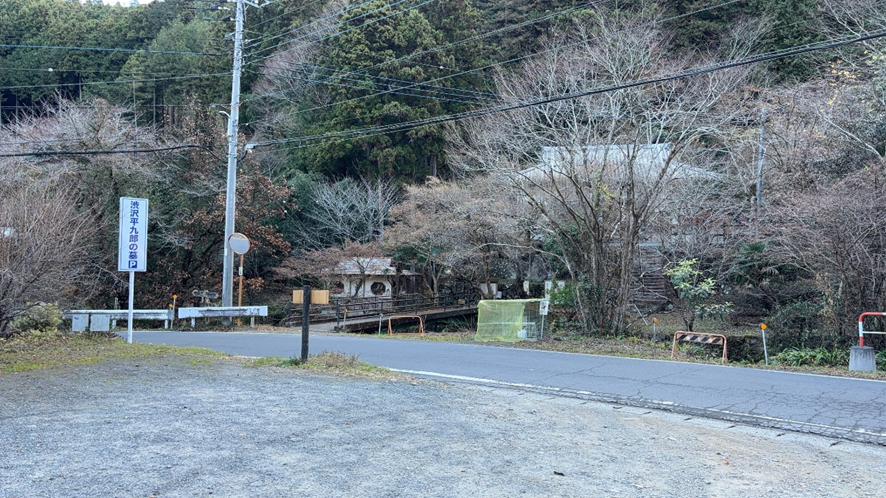
Edo Castle surrendered on April 11, 1868 (the fourth year of the Keio era), but a month and a half later, Shibusawa Heikuro, who served as commander of the Shogitai (Japanese troops) during the Battle of Hanno, committed suicide after his defeat. His body is buried at Zenno-in Temple, a branch temple of Ryuonji Temple, but during the Meiji period, Shibusawa Eiichi reburied him in Yanaka. Eiichi married Chiyo of the Odaka family, but adopted Chiyo's younger brother and cousin, Heikuro. Originally, the Shibusawa and Odaka families, including Eiichi, were passionate about revering the Emperor and expelling the barbarians. However, when Yoshinobu became Shogun, Eiichi became a shogunate retainer and accompanied Tokugawa Akitake on his European voyage, broadening his horizons and changing his views. He set off on his journey home after the restoration of imperial rule, but he was too late in time for the Boshin War.

Shibusawa Eiichi was a womanizer and it is unknown how many children he had, but he was very sad about the death of Heikurou, who died before the Meiji era, and he held memorial services for him many times. Looking at photos, he looks like a handsome and strong man.

There is a small park (Historic Site Yamabuki-no-Sato) as the birthplace of the legend of "Yamabuki Village" associated with Dokan, but there are apparently several candidate locations within Tokyo, so it remains merely a legend. The story goes that on the way back from falconry, it started to rain, so he stopped at a private home to borrow a raincoat, but the girl refused, composing a poem. The poem was written by Prince Kaneakira, son of Emperor Daigo, and goes, "Nanae Yae Hana wa Sakukedomo Yamabuki no Mi no (Mino) Hitotsu Da Ni Nakizo Kanashiki." However, if you listen to it without any knowledge of poetry, you won't understand what it's about. It's probably out of the question to even consider what kind of flower Yamabuki was in the first place.

Ogose is famous for its plum groves, and the azaleas and yellow bush jasmines mentioned above are said to be beautiful in spring. Even if I can't compose poetry, it would be nice to at least enjoy the flowers as I enter old age.


Comments