Nikko World Heritage Site ~ August 2026 ~

Nikko is traversed by three major highways (the Nikko Highway, the Reiheishi Highway, and the Aizu-Nishi Highway), and Imaichi is at the junction of them. All of these highways were lined with cedar trees planted in the 17th century, and even today, 20-30% of them remain, demonstrating the importance the Edo shogunate placed on these highways. The Reiheishi Highway was the route used by envoys sent annually from the imperial court to the annual festival of the Toshogu Shrine, branching off from the Nakasendo Highway at Takasaki and connecting to Nikko. I enjoyed a drive along the majestic tree-lined road for a while.

At the point where the Nikko Kaido and Reiheishi Kaido roads merge, there is the Oiwake Fudo-son temple, where a stone Jizo statue nearly 3 meters tall is enshrined. It is said to have been made from stones that were washed down from upstream by a flood of the nearby Otani River.

On the opposite bank of the Otani River is the starting point of the Shimotsuke Road (Aizu-Nishi Road), which connected Aizu-Wakamatsu and Imaichi, and it is said that Hoshina Masayuki made pilgrimages to Nikko seven times on his way to Edo for the sankin-kotai system.

When I visited Aizu the other day, I drove along the Shimotsuke Highway, and I realized that for Masayuki, Nikko was not only home to the Toshogu Shrine where his grandfather (Ieyasu) is enshrined, but also to the memorial temple (Taiyuin) for his half-brother Iemitsu, who had welcomed him into the family and treated him well, so it must have been a place he couldn't simply pass by.

The shrines and temples of Nikko were registered as a World Heritage Site in 1999. I vaguely remember visiting Nikko Toshogu Shrine a long time ago, but since then I've avoided it because it's such a famous place and I imagine it would be crowded with tourists. It was crowded even though it was a weekday, as it was during the summer holidays, but its overwhelming presence is truly impressive. It is extremely rare for eight 17th-century buildings to be designated as National Treasures, and the exquisite craftsmanship and artistry represent the highest level of technology in Japan at the time, which shows that the Edo Shogunate, which achieved peace throughout the land, had the economic power to do so.

The inner shrine contains the tomb of Ieyasu. Before his death, he instructed that his remains be mourned at Kunozan for one year, and then enshrined as a deity in Nikko.

I also visited the tomb at Kunozan Toshogu Shrine the year before last, and indeed, they are very similar. According to the explanation at Kunozan, Ieyasu was buried sitting facing west, but there is also a theory that his remains are actually still at Kunozan.

Nowadays, with numerous cultural properties designated as National Treasures and Important Cultural Properties, and being a central part of the World Heritage Site, the maintenance budget is likely abundant. However, the treasure hall has been renovated, and restoration work sites can be seen in various places on the grounds. I am interested in how such a large-scale facility has been maintained after the Meiji Restoration, when economic support from the shogunate ceased. After the anti-Buddhist movement, Nikkozan Shrine and Temple were divided into two shrines and one temple: Toshogu Shrine, Futarayama Shrine, and Rinnoji Temple. However, during the Edo period, it was a single shrine where Shinto and Buddhism were syncretized, and the shogunate entrusted it with a territory of 10,000 koku, comparable to that of a daimyo.

In the Meiji era, they lost their income and fell into poverty, but local volunteers and former shogunate retainers supported them. After the enactment of the Law for the Preservation of Ancient Temples and Shrines in 1897, they were able to receive national support. After the war, the law was renamed the Cultural Properties Protection Law and continues to this day, and thanks to it, we can appreciate these precious cultural heritage sites.

In my recent travels through various regions, I have seen many cultural heritage sites being lost due to the increasing number of abandoned temples and shrines. Many valuable Buddhist statues designated as important cultural properties in rural areas remain buried in sturdy concrete storage facilities, offering no opportunity for appreciation. While there is much debate these days about tax cuts, I fear that issues like the protection of cultural heritage are being put on the back burner. Toynbee said that "civilizations die from suicide, not by murder," and I am increasingly concerned about the loss of understanding of Japanese culture and history.
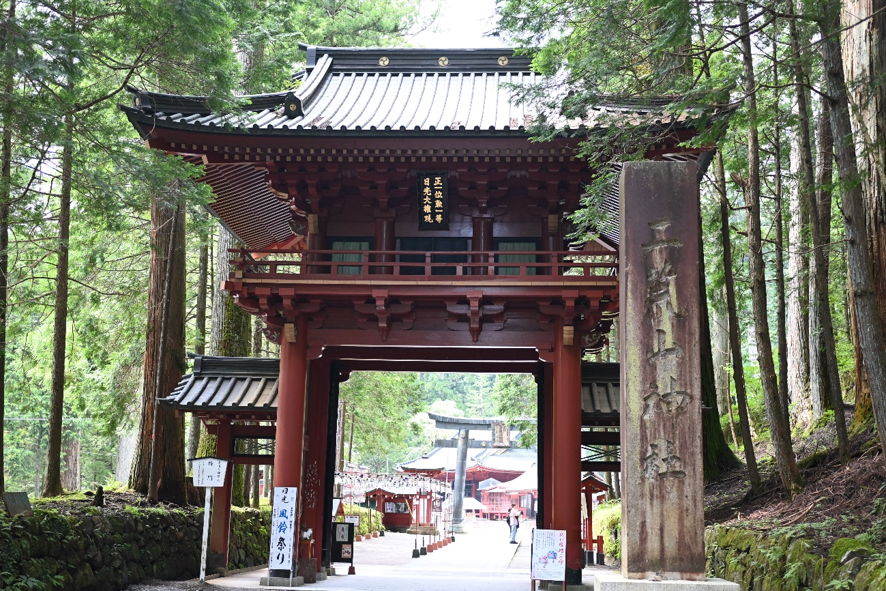
It seems that the area from Nikko to Lake Chuzenji had a large group of temples and shrines even before the Toshogu Shrine was built. A large religious sphere was formed there, consisting of Futarasan Shrine, which enshrines Mount Nantai (ancient name: Mount Futara), and Rinnoji Temple (originally Shihonryuji Temple), which was founded by Shodo Shonin during the Nara period. It appears that Nikko is named after the Japanese reading of Mount Futara.

Since Prince Shuchō, a son of Emperor Go-Mizunoo, was appointed as the head priest of Rinnōji Temple, the position was held by prominent members of the imperial family for ten generations until the end of the Edo period. However, he also concurrently served as the head priest of Kan'eiji Temple, and it seems he usually resided in Edo.

The first person appointed to Edo as a head priest during the late Edo period was Prince Kugen Hōshinnō, who came from the Fushimi-no-miya family. He had a strong rebellious spirit against the new government and supported the Shōgitai in Edo. After the restoration of imperial rule, he petitioned for the life of Tokugawa Yoshinobu and was installed as the leader of the Ōuetsu Reppan Alliance. After the Meiji Restoration, he was placed under house arrest before becoming Prince Kitashirakawa Yoshihisa, and built a career as a professional soldier. He died of illness while serving as the commander of the Imperial Guard Division in Taiwan during the First Sino-Japanese War.

Tsuneyasu Takeda, who is active on television and other media, comes from the Takeda family, which originated from the Kitashirakawa family, and Prince Yoshihisa was his great-great-grandfather.

Matsudaira Katamori, the lord of the Aizu domain, who showed the last stand of the Ouetsu Reppan Alliance during the Boshin War, served as the chief priest of Nikko Toshogu Shrine in the Meiji era. He himself was adopted from a branch domain of the Owari domain and inherited the Aizu Matsudaira family, but the discipline established by the domain's founder, Hoshina Masayuki, and his absolute loyalty to the Tokugawa family remained undiminished even after 200 years. While Tokugawa Yoshinobu and the three main branches of the Tokugawa family readily submitted to the new government one after another, his display of the last vestiges of bushido marked the end of Japan's modern era, a refreshing and decisive moment. Today's head of the Tokugawa main family is his descendant.

Next to Futarasan Shrine stands Taiyuin Temple, a temple that resembles an outlying part of Rinnoji Temple, and is the family temple of Tokugawa Iemitsu. The successive Tokugawa shoguns made 19 pilgrimages to Nikko over 260 years, and Iemitsu made more than half of those visits, 10 times. The 15 successive shoguns are generally buried at Kan'eiji Temple and Zojoji Temple, with the exceptions being Ieyasu, who became a deity, Yoshinobu, whose tomb is in Yanaka Cemetery, and Iemitsu.

I visited the former Nikko Tamozawa Imperial Villa, built for Emperor Taisho, who was in poor health. Originally built as a summer retreat during his time as Crown Prince, it was used as a place for long-term stays and official duties after his enthronement, and is also known as a place where the Emperor Emeritus took refuge during the last war. It is thought that a considerable number of people moved and worked there from the Imperial Palace, using it as both a place of residence and official duties. The 400-year-old weeping cherry tree is still thriving, and the contrast with the building is beautiful. I'll add it to my list of cherry blossom viewing spots for next year.

The Nikko area has long been a popular destination for elementary school students' field trips from the Kanto region, and it seems that many people have been there but can't remember when. As someone from Kanazawa, I remember visiting Toshogu Shrine a long time ago, but I think this was my first time seeing Kegon Falls, and I made sure to take a good look at it.

I thought it was a good idea to visit the typical tourist spots while you have the chance. The famous Three Wise Monkeys (see no evil, hear no evil, speak no evil) are not a pun on "don't get involved in trivial matters," but rather an educational lesson that you should not show or teach young children bad things and raise them to be honest. This summer has seen many sudden downpours and the heat hasn't lasted long, but we were blessed with good weather this time and were able to enjoy a refreshing summer in the highlands.

I visited the Hōtoku Ninomiya Shrine in Imaichi because I heard that the grave of Ninomiya Sontoku is located there. Mr. Sontoku, who made a name for himself in the reconstruction and economic revitalization of rural areas in the Odawara and Sōma domains, was a renowned agricultural management consultant, as we would call it today. His last work was in the Imaichi area, which was formerly part of the Nikko Tōshōgū territory, where he ended his 70-year life.


Comments