The southern exclave was incorporated into Akita Prefecture: Odate and Kazuno ~ SEP, 2026 ~

The Kanto region has been experiencing a long period of lingering rain since before the Obon festival, resulting in many golf outings and trips being postponed or canceled. The hot spring inn I had booked was located near Oirase in Aomori Prefecture, far from the front, and I thoroughly enjoyed the long-awaited blue skies and crisp, dry air. This year's rice paddy art in Inakadate is themed after the ghost paintings by Maruyama Okyo that were dedicated to Kudoji Temple in Hirosaki.

Next to it is a Reiwa-era version of the ghost, drawn by local cartoonist Chihiro Ishizuka, based on the original. I wondered why a ghost painting would be used in rice paddy art, but it was only recently (2021) that it was confirmed that this ghost painting is an authentic work by Okyo, and the model is said to be the concubine of Morioka Motonori, a senior retainer of the Hirosaki domain. He was reprimanded for accepting bribes and indulging in pleasure during the Great Tenmei Famine, and was placed under house arrest before committing suicide, so there seems to be some drama behind it.

The inn where I stayed, deep in Oirase, was Tsuta Onsen, the same one I used as a base for my Tsugaru tour two years ago. Keigetsu Omachi spent his later years at this inn and died of a stomach ulcer from excessive drinking (1925). Antonio Inoki and his wife, who frequently visited the inn for therapeutic bathing, were so impressed by how well the inn maintained Keigetsu's grave that they built their own grave next to it.

The lyrics to Takuro Yoshida's famous song "Tabi no Yado" (Traveler's Inn) were written by Osami Okamoto, and apparently, the inn where he stayed on his honeymoon was the inspiration. Although I haven't yet had the opportunity to admire the crescent moon (part of the song), I'm impressed by the direct-flowing hot spring water, which I can soak in while watching the bubbles occasionally rise from the source, and the high-quality meals, and I'm becoming a regular customer.

This time, we traveled south from Lake Towada, passing through Odate and Kazuno. The shogunate, under an exception to the "One Castle Per Province" decree, allowed Akita to have castles in Yokote and Odate in addition to their main castle, Kubota Castle (Akita City). This area is also famous as a breeding ground for Akita dogs, and the Akita Dog Museum is located next to the ruins of Odate Castle where you can learn about the history of breed preservation.

This region belongs to Hinai District and is famous for its local chicken. It could be called a sacred place for salarymen who love yakitori. There are several restaurants in Tokyo that serve raw liver made from chickens that have just been slaughtered and flown in, and this is one of the important functions of Noshiro-Odate Airport.

Until the early Heian period, the border between the Yamato court and the Emishi extended to Akita Castle in Dewa Province and Izawa Castle (central Iwate Prefecture) in Mutsu Province. After the Former Nine Years' War and the Later Three Years' War, and the rise and fall of the Oshu Fujiwara clan, the area gradually became more manorial. In the Kamakura period, assimilation into Japan progressed through the enclosure of manors by the Gokenin (vassals) dispatched as jito (land stewards) and the Hojo clan. The Azuma Kagami mentions Hinai County as the place where Fujiwara no Yasuhira was killed after his defeat in the Oshu War, suggesting that counties were defined as administrative units by the end of the Heian period.

The Asari clan, who were appointed to Hinai as a reward for their service during the Jisho-Juei War, were a branch of the Kai Genji clan and belonged to the same family as the Nanbu clan. Although they were destroyed by the Hiyama Ando clan, who were based in the Oga Peninsula and the Akita City area during the Sengoku period, traces of them remain at the Ogita Shinmei Shrine and the Tokko Dainichi Shrine.

Tokko Castle, located near Dainichi Shrine, appears to have been the base of operations for a long time, but there were many signs warning of bear sightings, so I refrained from venturing in. During Hideyoshi's pacification of Oshu, the area came under the control of the Ando clan, and the castle was abandoned in 1598. Two years later, after the Battle of Sekigahara, the Satake clan was stationed in the area, and the Ando clan, who had taken the name Akita, were transferred to Shishido in Hitachi Province, and later moved to Miharu.

Gyokurin-ji Temple in the city was founded by Asari Noriyori and later received protection from the Satake Nishi family, who ruled Odate. The Kubota Domain withdrew from the Ouetsu Reppan Alliance and was attacked from the Shonai Domain to the south and the Morioka Domain to the northeast, and for a time Odate was occupied by the Nanbu forces. This temple was later the encampment of Lord Sawatamekazu, the deputy commander of the Ou Pacification Force, who turned the tide of the war and confronted the Nanbu forces.

Kazuno District, now part of Akita Prefecture, was formerly part of the Nanbu Domain. At the end of the Edo period, the area's rice production was just over 20,000 koku, which is roughly 10% of the Morioka Domain's 200,000 koku. However, since the Middle Ages, gold and copper mining was thriving in the Kosaka and Osarizawa mines, and the area was a site of conflict since the Sengoku period. At the end of the Sengoku period, the Nanbu clan acquired the territory, and it remained part of the Nanbu domain throughout the Edo period. However, it was constantly in a tense relationship with the Kubota Domain, facing off against the neighboring Odate region, and became the stage for the Boshin War.

The Nanbu Domain, in order to govern its vast territory, made an exception to the "One Castle Per Province" decree and had castles in Hanamaki and Tono. However, it also had a mansion that could be called a castle in Hanawa, the center of Kazuno. It is now the site of Hanawa Elementary School.

Major resistance movements against Hideyoshi's pacification of Oshu manifested as the Kasai-Osaki Rebellion, instigated by Date Masamune, and the Kunohe Masazane Rebellion, which developed from a succession dispute within the Nanbu family. Masazane was highly independent within the Nanbu clan and rebelled against Nobunao, who had inherited the headship of the family. Hideyoshi reacted severely to this, sending a large army with Hidetsugu as its commander. Masazane's younger brother, Nakano Yasuzane, fought on Nobunao's side, but after the war, he retrieved his brother's remains and mourned him. Yasuzane's descendants ruled the Hanawa domain for generations, and Chonenji Temple became their family temple.

Adjacent to it is Ontoku-ji Temple, which houses a monument to those who died in the Boshin War. The Nanbu clan troops who attacked Odate from their base in Hanawa numbered 2,000. The Aizu clan, with a domain of 280,000 koku, is said to have had a regular army of just over 3,000 men, so it is believed that the Nanbu family deployed a considerable number of troops in the attack on Odate.

The Dainichireiki Shrine was founded by Emperor Keitai and rebuilt by Gyoki in 718 AD. There is a legend in the area called "Danburi Choja" and this shrine is one of the places associated with it. "Danburi" means dragonfly, and the story goes that the lord was lured by a dragonfly to a spring where sake gushed forth, becoming very wealthy, and his daughter (Kichijohime) served Emperor Keitai. The nearby Yoneshiro River is said to have been named because it turned white from the water used to wash rice.
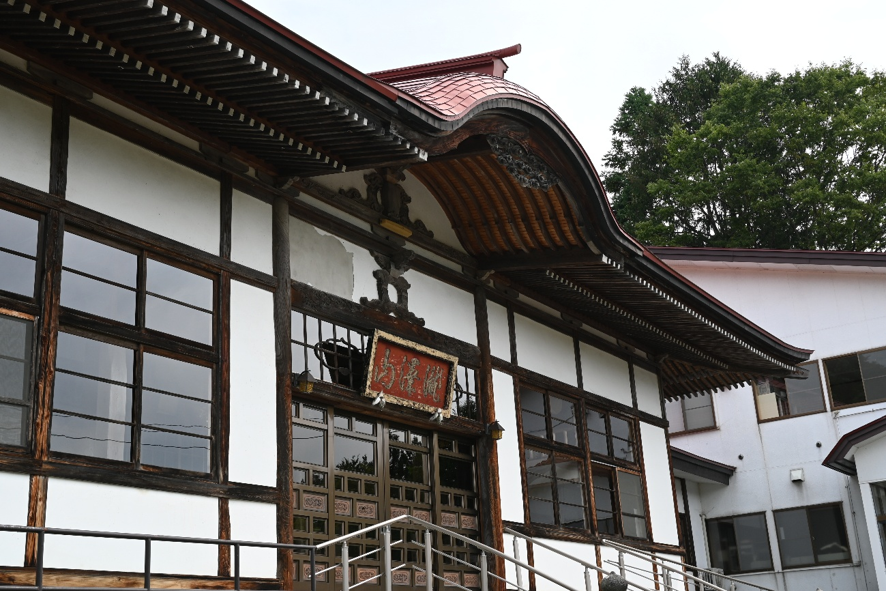
Kichijōin Temple is where Princess Kichijō, who returned from the capital after her parents' death, was buried, and it is said that this temple was also built by Gyōki. Gyōki, who carried out charitable work mainly in the Kinai region, was forbidden from his activities by the imperial court and persecuted until he was officially recognized as a monk by Emperor Shōmu. He probably didn't come all the way here, but I won't nitpick about the historical accuracy. Considering that this area has long been famous for gold dust, the sake spring may have been gold, and it is an interesting story if the folk legend was created during the process of assimilation into Japanese culture from ancient to medieval times.
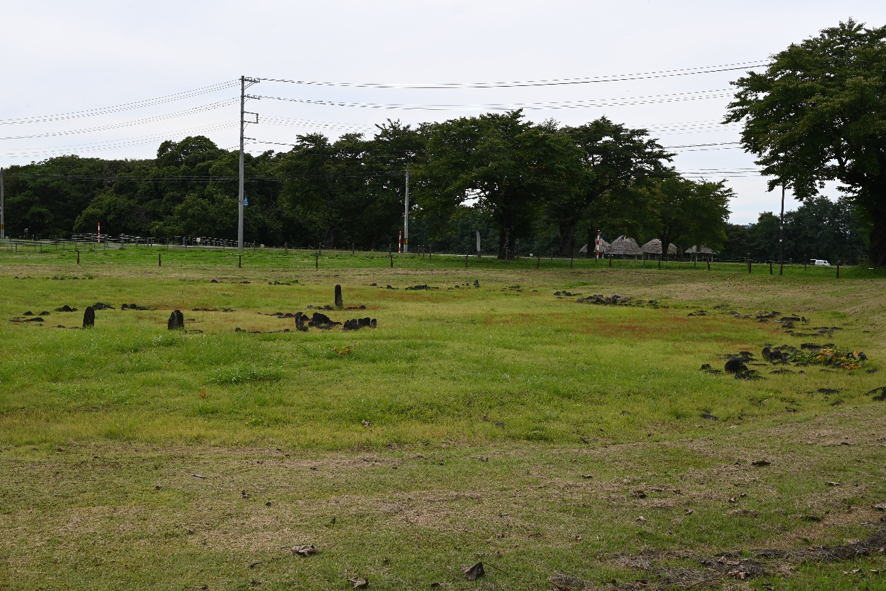
Kazuno is home to the Ōyu Stone Circle, a 4,000-year-old Japanese stone circle. Generally, the Earth's temperature fluctuates in increments of tens of thousands of years, and the last peak of global warming was about 6,000 years ago, when sea levels in the Northern Hemisphere were about 4 meters higher than they are today, a period known as the "Jōmon Transgression." During this time, Hokkaido and the Tohoku region were warm and pleasant, and many Jōmon period ruins have been unearthed. It is known that river stones from the Ōyu River, a tributary of the Yoneshiro River, were transported here, and it is thought that they were used for rituals, allowing us to feel firsthand the Japanese spirit of fearing and revering nature as a god.

I visited Towada Shrine, which I didn't visit last time. There is a legend that Sakanoue no Tamuramaro erected a shrine here and crossed to the other side of the lake, but historically, Tamuramaro defeated Aterui near Shiwa Castle (Morioka City) in the early 9th century and returned to Kyoto, so this is probably not true.

The volcano at Lake Towada is still active, and its most recent eruption was in 915 AD. This was reportedly the largest eruption in Japanese history, and in Kitaakita City, there are ruins of what was likely a government office or temple buried by the mudflow that occurred at that time, and excavations are ongoing. To put it dramatically, it's like Japan's Pompeii.


Comments